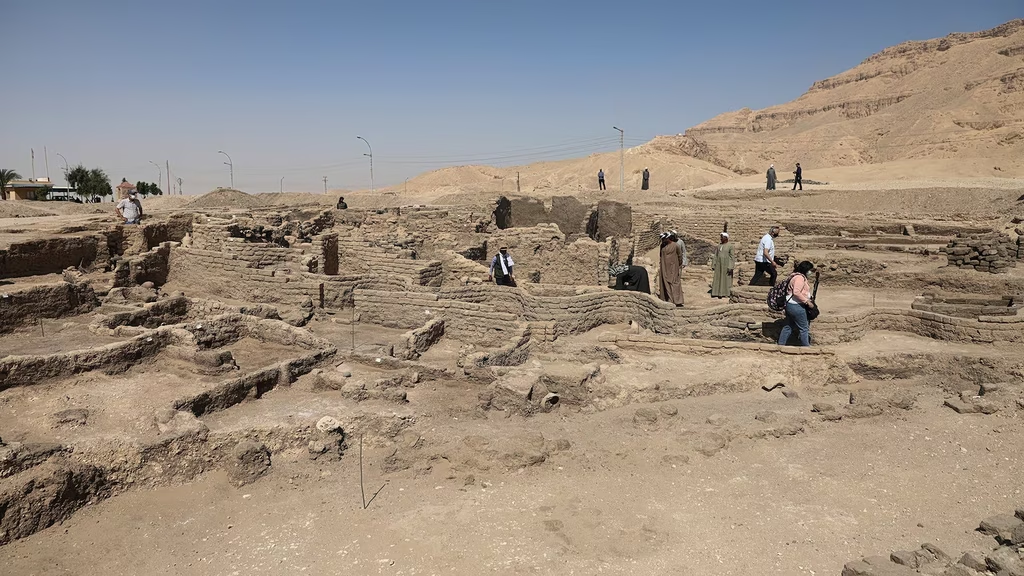
On a lighter note from the region, archaeologists from the Netherlands’ Leiden University have uncovered a 3,000-year-old tomb near the southern Egyptian city of Luxor. The tomb, found in the Sheikh Abd el-Qurna necropolis on the west bank of the Nile, has been identified as belonging to a man named Paser and is believed to date to the Ramesside period — spanning Egypt’s 19th and 20th dynasties.
Egypt’s Ministry of Tourism and Antiquities announced the discovery on Sunday, the latest in a string of high-profile archaeological finds that officials hope will boost the country’s tourism sector. The Ramesside era, named after a succession of pharaohs called Ramesses, represents one of ancient Egypt’s most powerful and culturally prolific periods.