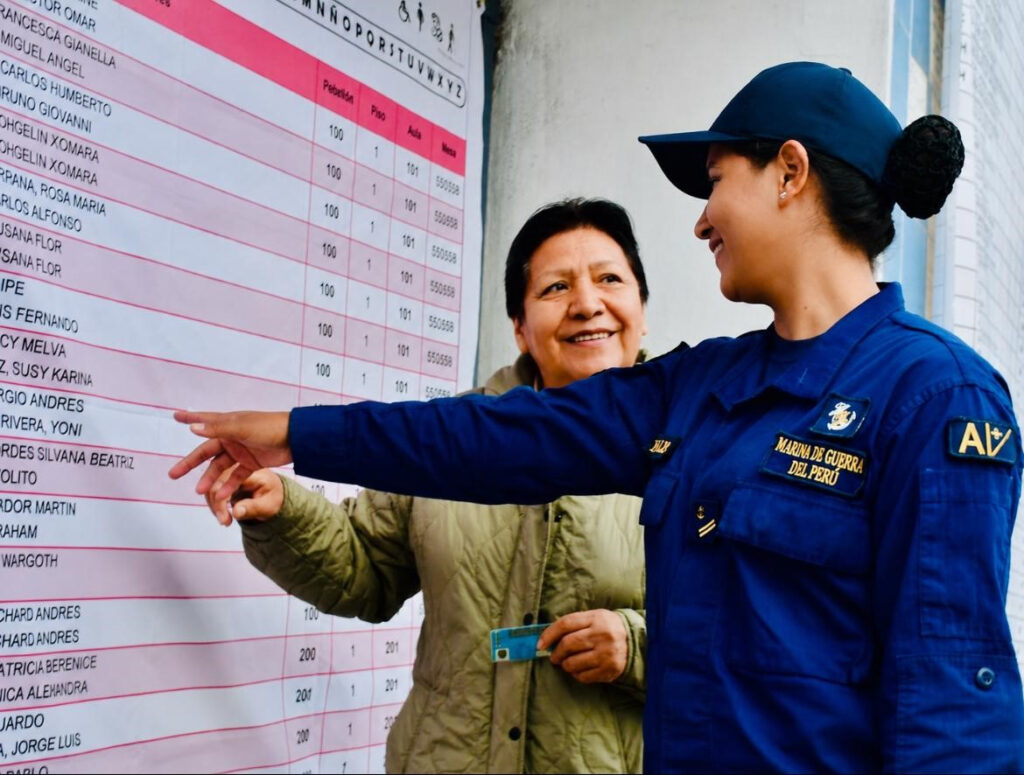
Millions of Peruvians headed to the polls on Sunday for a presidential runoff election conducted under tight security — and not without controversy. Electoral authorities reported the process was proceeding “with normality,” but multiple reports emerged of hundreds of pre-marked ballots found at voting stations across the country, raising immediate concerns about irregularities.
Adding to the tension, Roberto Burneo, a senior electoral official, warned that poll workers (“personeros”) are prohibited from publishing videos of the vote count on social media — a measure apparently aimed at controlling the flow of unverified information but one that drew criticism from transparency advocates.
More than 6,300 polling stations had yet to be set up at the national level as the day began, an organizational challenge that underscored the logistical complexity of the vote.
The political atmosphere was charged. President Balcázar cast his ballot and urged both candidates to respect the outcome: “Whoever loses should respect the results.” Candidate Roberto Sánchez echoed the sentiment, calling on citizens to “respect the free vote.” But not all voices were conciliatory — Lima Mayor López Aliaga continued to insist on fraud without presenting evidence, while former president Pedro Castillo declared, “We will once again defeat corruption and the narrative of fear.”