The most consequential story this weekend unfolded across the Middle East, where the United States and Iran traded fresh military strikes before agreeing — again — to halt attacks. The US military carried out strikes on multiple targets inside Iran early Sunday in response to an Iranian attack on a ship transiting the Strait of Hormuz. Tehran responded by launching strikes against US bases in Bahrain and Kuwait before both sides agreed to stand down.
The cycle of escalation and de-escalation has exposed what Greek outlet Ethnos described as a “waltz on thin ice” — a ceasefire whose fragility might paradoxically be what holds it together, as neither side appears willing to cross the threshold into full-scale war.
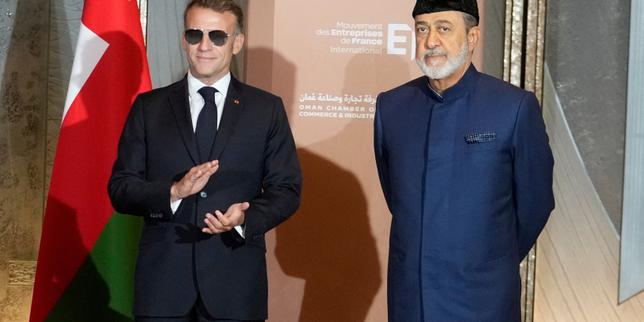
Diplomatic efforts are intensifying from multiple directions. Pakistan’s Prime Minister Shehbaz Sharif will travel to Iran and Turkey from July 3 to 6, calling on Tehran and Washington to exercise restraint, particularly in the wake of the Islamabad Memorandum of Understanding. Meanwhile, in Paris, French President Emmanuel Macron and Oman’s Sultan Haïtham Ben Tareq issued a joint call for “free navigation, without conditions or restrictions” in the Strait of Hormuz — a pointed message aimed at both Tehran and Washington as the world’s most critical oil chokepoint remains under threat.
The New York Times editorial board added a domestic dimension to the geopolitical crisis, criticizing the US Supreme Court for “bestowing new powers on a president who often behaves as an aspiring autocrat” — a ruling that could further concentrate executive authority at a moment of heightened international confrontation.