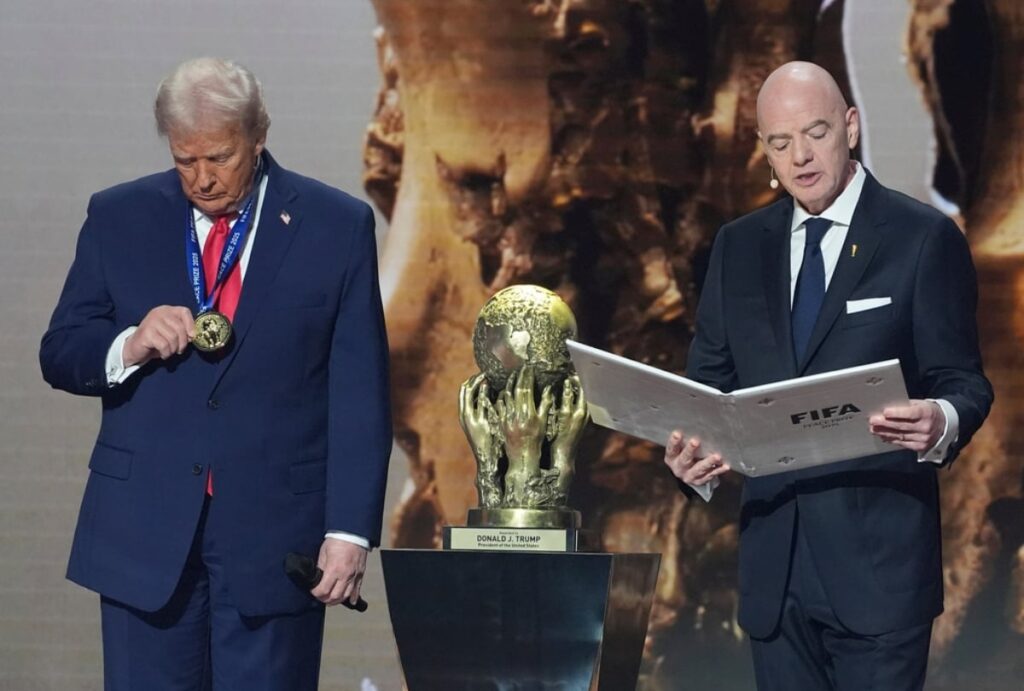
The biggest story swirling around the 2026 FIFA World Cup isn’t on the pitch — it’s in the halls of power. U.S. President Donald Trump has openly admitted that he personally telephoned FIFA President Gianni Infantino to demand that the suspension of American striker Folarin Balogun be reconsidered following a controversial red card during the USA’s Round of 32 match against Bosnia and Herzegovina.
“It wasn’t a foul, not even a violation,” Trump declared, despite acknowledging limited familiarity with the sport’s rules.
The intervention caused an immediate uproar. Belgium filed a formal appeal against the decision to allow Balogun to play in the next round, but FIFA’s appeals body rejected the challenge — meaning the American forward is cleared to feature when the USA face Belgium in the Round of 16 on July 7. FIFA confirmed the ruling, and Infantino issued a carefully worded statement: “FIFA’s bodies are independent.”
Brazil’s football federation (CBF) came to the defense of Raphael Claus, the Brazilian referee who officiated the match and whom Trump reportedly called “suspect.” The affair has drawn comparisons to historic instances of political interference in sport. Brazilian outlet CartaCapital drew a sharp parallel in a column titled “FIFA, Mussolini, Médici, and Trump,” noting that with Brazil already eliminated in humiliating fashion in the Round of 16, Brazilian fans are now simply rooting against the U.S. team.
The scandal has overshadowed what should be a festival of football, tainting the tournament’s credibility and raising fundamental questions about the boundary between political power and sporting governance.