The Iran conflict is not just an American story. Its consequences are radiating outward, reshaping diplomacy, economics, and even cultural events across multiple continents.
BRICS Convenes in New Delhi
India will host the BRICS foreign ministers’ meeting in New Delhi on May 14–15, with geopolitical tensions in the Middle East expected to dominate the agenda. Russian Foreign Minister Sergey Lavrov has confirmed his attendance, and the gathering — chaired by India’s External Affairs Minister S. Jaishankar — will lay the groundwork for the BRICS leaders’ summit scheduled for September.
In an exclusive interview ahead of the meeting, Lavrov compared Western pressure on Global South countries over their trade with Russia to “neocolonial methods,” arguing that the Middle East crisis highlights Washington’s desire to control global energy flows. “They put pressure on everyone, demanding that they should not purchase Russian oil, and this is unfair play,” he said.
Meanwhile, in India’s domestic politics, veteran leader Sharad Pawar demanded that Prime Minister Modi convene an all-party meeting to discuss the impact of the West Asia conflict — a sign of just how deeply the war is reverberating even in countries not directly involved.
Norway Invited to Tehran
In a potentially significant diplomatic development, Iran has invited Norway — via State Secretary Andreas Kravik — to Tehran. According to Dagbladet, Iranians facing financial hardship want a resolution to the war with the United States. Norway’s long history as a peace broker, from the Oslo Accords to its role in Colombian peace talks, makes it a natural interlocutor, though whether the invitation leads to substantive negotiations remains to be seen.
The Cynical Economics of War
Greek outlet Ethnos published an analysis arguing that the Iran war could have “an unexpectedly positive side for the global economy” — a provocative thesis about how conflict-driven spending and energy market reshuffling can paradoxically boost certain global indices. The framing underscores the moral tension at the heart of war economies: markets may rise even as lives are destroyed.
Eurovision Becomes a Battleground
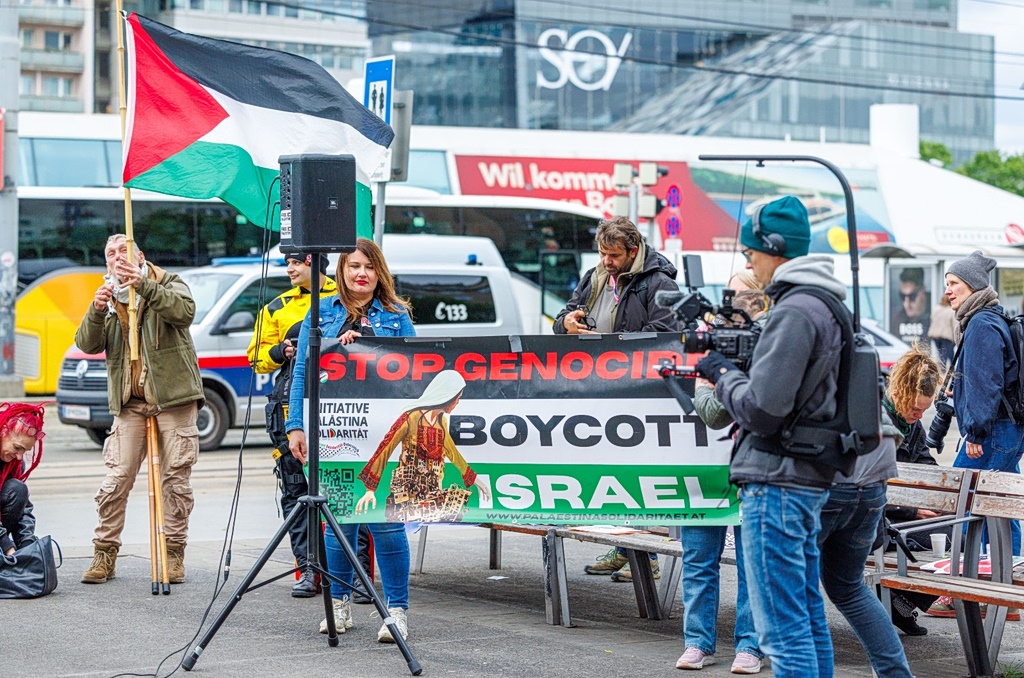

Even Eurovision has not escaped the conflict’s gravitational pull. Pro-Palestinian demonstrators took to the streets of Vienna on Tuesday to protest Israel’s participation in the 2026 Eurovision Song Contest, arguing that an event meant to promote peace and unity should not include a state they accuse of devastating Gaza. Authorities announced that additional protests are planned for May 15, the eve of the final, with the possibility of spontaneous mobilizations on the day of the event itself.
Sources: