
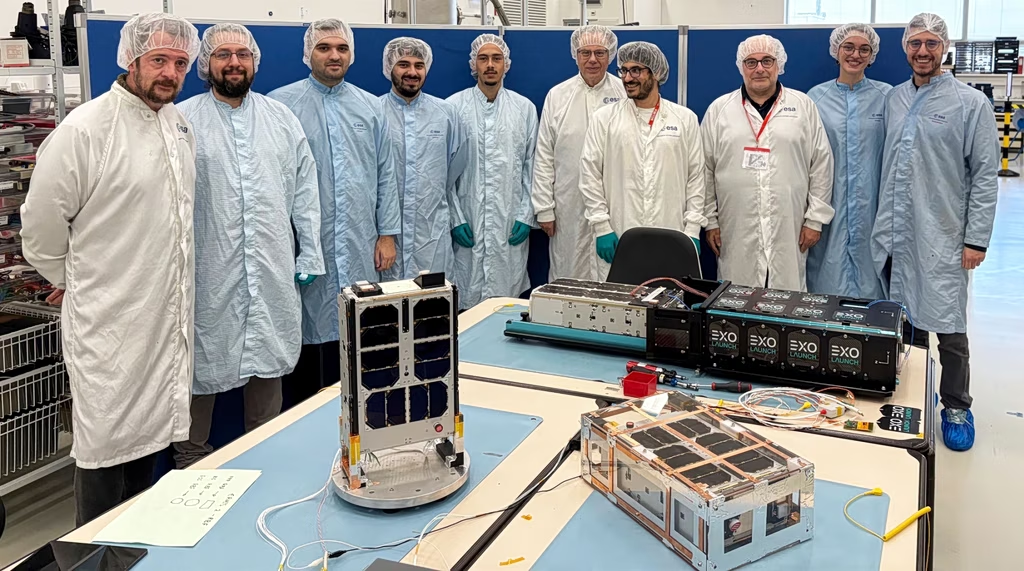
Closer to Earth — but not by much — four Greek-built nanosatellites successfully launched into orbit this week, marking a proud moment for the country’s academic and aerospace communities. Three of the spacecraft, named ERMIS 1, 2, and 3, were built at the University of Athens’ Aerospace Department and launched aboard a SpaceX Falcon-9 rocket from Vandenberg Air Force Base in California into a 500-km orbit. A fourth satellite, PeakSat, was designed and built entirely by undergraduate students at the Aristotle University of Thessaloniki for optical communications research. The ERMIS project involved 47 scientists, engineers, and researchers from multiple Greek universities and the National Observatory of Athens, with construction taking approximately 18 months.

Walter Murrow
April 1, 2026
0
6
