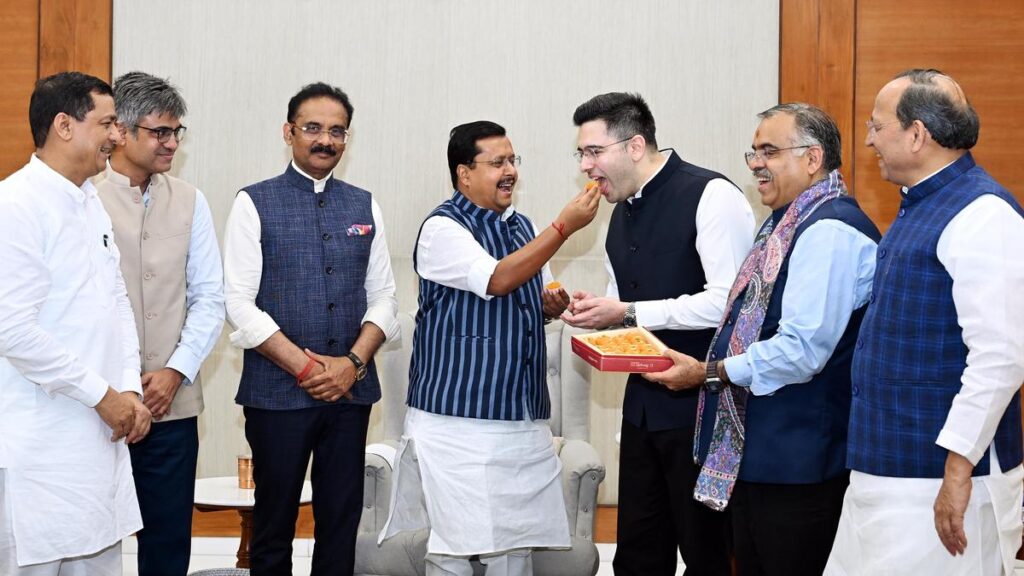
Indian politics was shaken last week when seven of the Aam Aadmi Party’s 10 Rajya Sabha members — including prominent figure Raghav Chadha — quit to join the ruling BJP. The mass defection raises immediate legal questions under India’s anti-defection law, which is designed to prevent exactly this kind of floor-crossing.
Legal experts are now debating whether the MPs will face disqualification. The anti-defection law contains exceptions, but the Supreme Court’s interpretations have historically been complex and case-specific. Meanwhile, the defections came as Tamil Nadu and West Bengal went to polls, with both states recording all-time high voter turnouts — a sign of an energized electorate during a period of intense political realignment.