
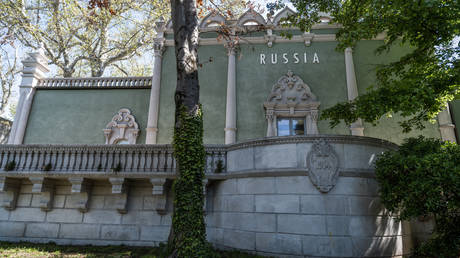
In a striking intersection of art and geopolitics, the five-member jury of the Venice Biennale announced it would not give awards to artists from countries whose leaders face International Criminal Court charges for crimes against humanity. The decision effectively locks out both Russia and Israel — two countries whose leaders are subject to ICC arrest warrants, and both of which reject the court’s jurisdiction.
The move directly contradicts the Biennale’s stated policy of non-exclusion, raising questions about how cultural institutions navigate the tension between artistic openness and political accountability. Adding another layer, one jury member — Marta Kuzma, a professor at the Yale School of Art — is of Ukrainian descent, a detail that has already fueled debate about impartiality.
The decision is likely to spark fierce arguments about whether cultural boycotts are legitimate instruments of international pressure or whether they punish individual artists for the actions of their governments.