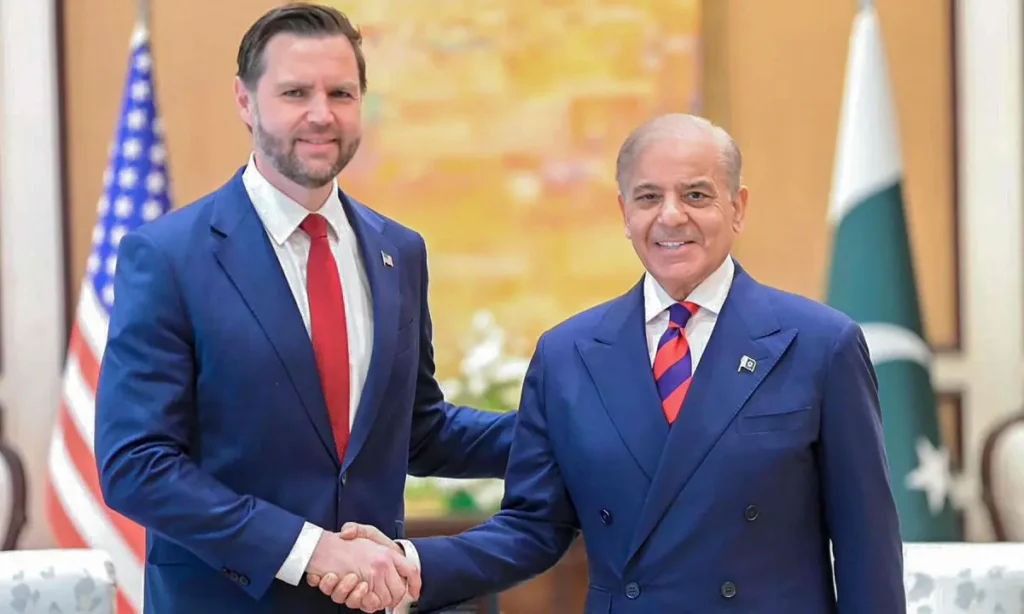
The most consequential story of the day unfolded in Pakistan’s capital, where US Vice President JD Vance met with Prime Minister Shehbaz Sharif ahead of a direct round of negotiations between Washington and Tehran — the so-called “Islamabad Talks.”
Vance arrived flanked by Special Envoy Steve Witkoff and Jared Kushner. Pakistan, positioning itself as an honest broker, expressed hope that the discussions “would serve as a stepping stone toward durable peace in the region,” according to a statement from the Prime Minister’s Office. PM Shehbaz “reiterated that Pakistan looks forward to continue its facilitation of both sides in making progress towards sustainable peace.”
But the negotiations appeared to be anything but smooth. Greek outlet Ethnos described the atmosphere as a diplomatic “thriller for strong nerves,” likening the session to “room diplomacy” conducted on “the razor’s edge.” And a key sticking point quickly emerged: frozen Iranian assets. Tehran has said that any agreement on a permanent end to hostilities must include the unfreezing of sanctioned assets and an end to Israel’s war on Hezbollah in Lebanon. A US official, however, flatly denied reports that Washington had agreed to any such unfreezing, according to The Hindu.
A tangible sign that the ceasefire between the US and Iran is holding, at least for now, came from the Strait of Hormuz. The Indian-flagged LPG tanker Jag Vikram, owned by Mumbai-based Great Eastern Shipping Company and carrying approximately 20,000 tonnes of LPG, became the first India-flagged vessel to transit the strategically vital waterway since the ceasefire took effect. It was a small but symbolically important signal that commercial shipping — the lifeblood of the global energy market — is cautiously resuming normal operations.
The outcome of the Islamabad Talks remains uncertain, but the stakes could hardly be higher: a potential end to war, the future of sanctions policy, and the broader security architecture of the Middle East all hang in the balance.